Print on Demand

The decision regarding Print on Demand suppliers is a minefield because of the burgeoning options available and the particular issues around Amazon’s preferred supplier, Createspace.

pod

This task was helped by Karen Inglis’ excellent and now updated blog on the subject.

My decision was to use Createspace to distribute to Amazon globally and Ingram Spark for all other outlets including bookstores. For the ebook format I have chosen Kindle direct for Amazon and Smashwords for all other formats.

I also decided to order advance copies through Chandler Book Designs preferred POD printer in the UK. Chandler supplied the hi res pdf file and three different book covers to satisfy the different paper weights of the three POD suppliers which required varying spine sizes. Despite the doom and gloom comments on various blogs about difficulties in setting up Createspace and Ingram Spark accounts I did not have a problem and my pdf upload went smoothly.
 

Posted in Seeking John Campbell, preparing for publication | Tagged , , , , | Leave a comment

The blog of my month in Argentina


Most of March 2014 was spent in Argentina and between my last minute research I had time for sightseeing in Buenos Aires.

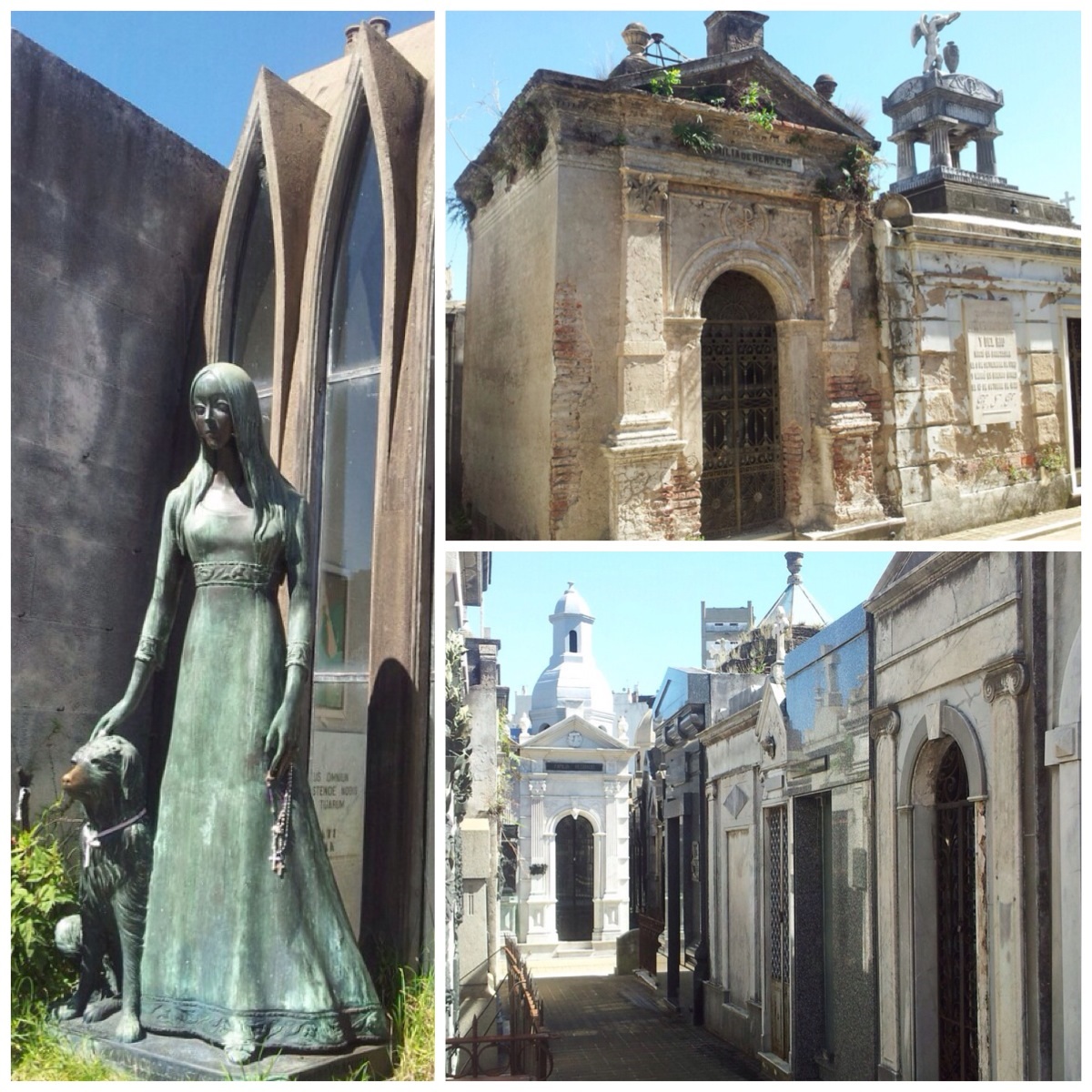
One of the most interesting places I visited was  Recoleta cemetary the final resting place of Eva Peron amongst others.

recoleta

In previous posts I have given you an insight into my search for the properties of my three John Campbells.  However during my trip I posted a blog mainly for family and friends who wished to followed my movements around the country.

This you can now follow in chronological order by visiting Surviving Argentina.

Posted in Seeking John Campbell, preparing for publication | Leave a comment

A month in Argentina (4)

John Argentine Campbell was a formidable sportsman and polo player. After being schooled at Fettes College and going up to Cambridge John returned to the Argentine and c. 1905 built the house below in the English style on land which formed part of his fathers estate.

In the garden stands an enormous english oak tree.

blog jac comb

House at Estancia El Jabali mapped HERE

John’s grandson now lives in the house and runs a large dairy herd on Estancia el Jabali. I was honoured to be invited to stay and learn more about the family.


Posted in Seeking John Campbell, preparing for publication | Tagged , , , , | Leave a comment

A month in Argentina (3)

From Monte Buey I took two more overnight buses. The first to Cordoba and the second to San Miguel de Tucuman where the decalartion of the Argentine independence was made in 1825.

John Otto Campbell sold Los Dos Hermanos after WWI and moved to Tucuman province. In his war records he had given his address as Alpachiri a small village difficult to find on any map. I hired a car and drove to Alpachiri as I believed JOC may have lived in woodland in the foothills of what is now a national park.

blog tuc com

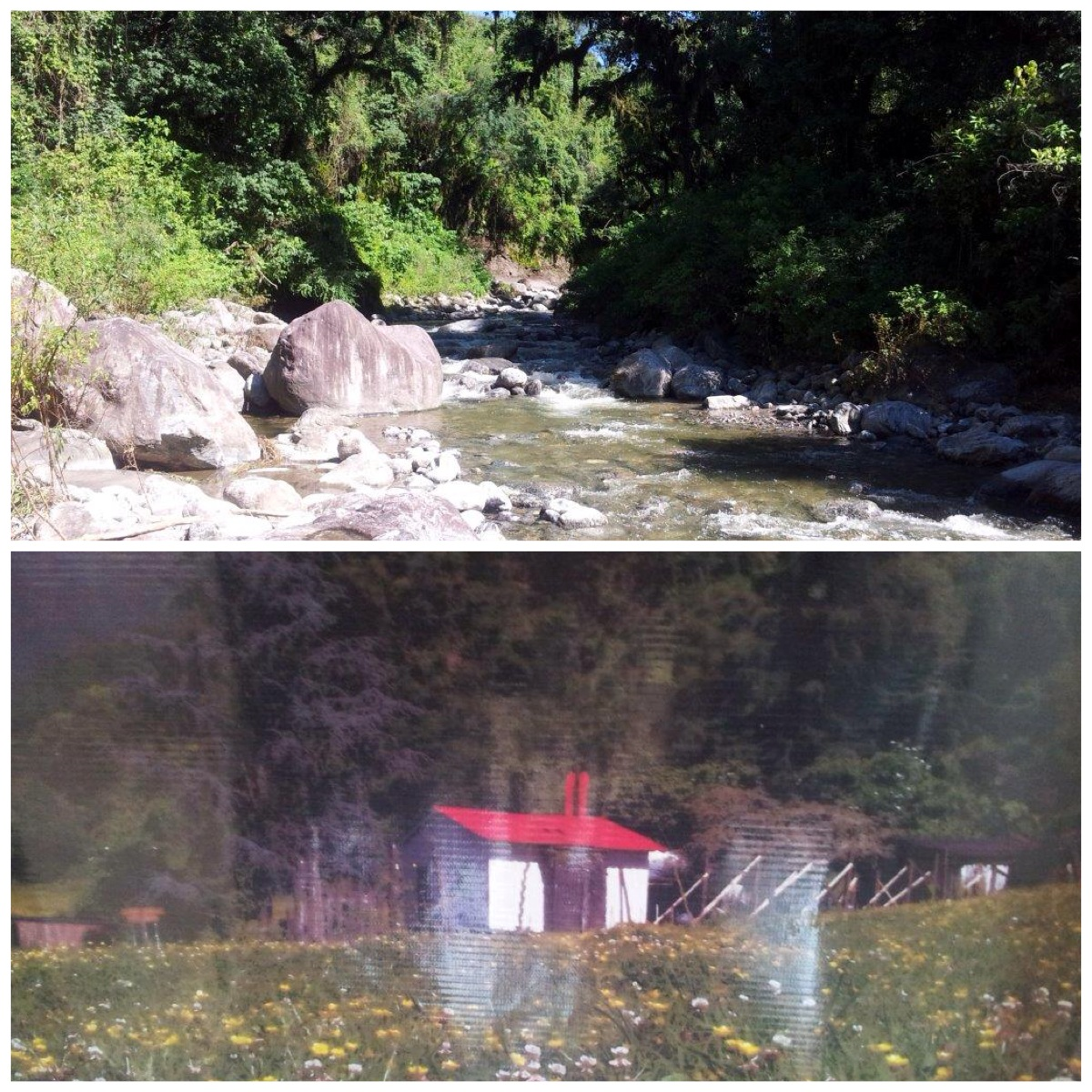
The river Las Pavas which I had to cross as I climbed into the national park and the red roof of puesto La Mesada where John Campbell may have lived during the summer. (The map location HERE is the entrance to the park)

Reaching the national park was more difficult than I had imagined and I was fortunate that the owner of the trekking lodge where I stayed insisted on accompanying me. My little car had forded a number of rivers before we reached the entrance which was already 900 mtrs above sea level. We walked into the park and relentlessly climbed for over 1.5 hrs  until we reached a sign saying that la Mesada, the hut reputedly owned by JOC, was a further 9kms. A bridge too far.

The image above shows one of several streams we had to wade through en route and the blurred image below is La Mesada taken from a poster in the rangers office.

Posted in Seeking John Campbell, preparing for publication | Tagged , , | 1 Comment

A month in Argentina (2)

A bus and taxi from Buenos Aires took me to Monte Buey.

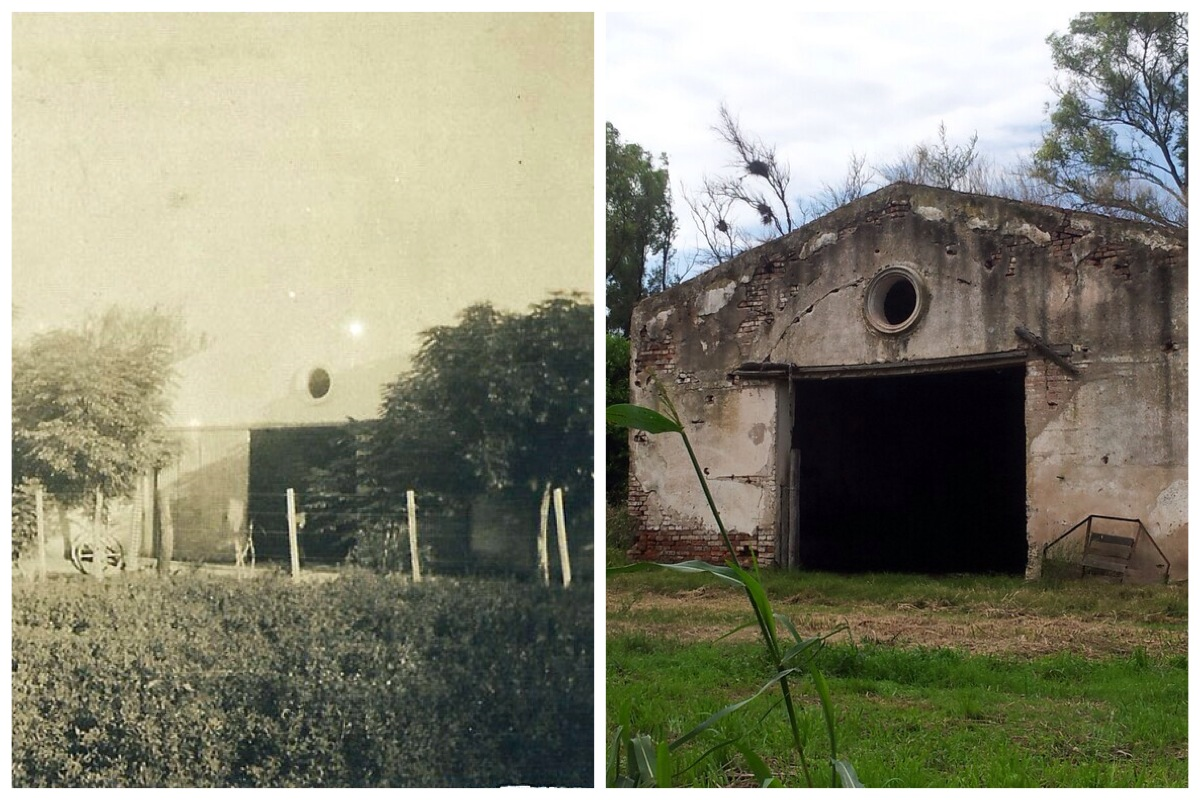
The following morning I set out with a local architect and an interpreter to locate the Estancia Los Dos Hermanos which had been owned by John Otto Campbell between 1905 and 1918. I was armed with an old photograph of the barn to help the location process.

We travelled along dirt roads for c. 10 miles, heading northeast of Monte Buey, and there it was …the barn was still standing. The remainder of the property was derelict but I was now standing on land in the middle of knowhere previously owned by someone I had read and written so much about.

blog dos com

           Barn of Est. Los Dos Hermanos c. 1905              Barn in March 2014  (see map HERE)

Posted in Seeking John Campbell, preparing for publication | Tagged , | Leave a comment

A month in Argentina (1)

Although the draft of Seeking John Campbell had been completed I felt a compulsion to visit Argentina to research a few loose ends and to understand where and how the families of the three John Campbells had lived.

In March 2014 I spent a month travelling to remote locations in the Argentine searching for information and properties. Each of the images comes with a map link where you can zoom in to the green arrow and see for yourself  how remote and inaccessible these places were.
blog juanita

Estancia La Juanita is mapped HERE

Estancia La Juanita is now a B&B lodge but it was built in the 1830’s by the brother of  Juan Manuel de Rosas the Governor of Buenos Aires Province. When de Rosas was overthrown his family was exiled and much of their property was sold off. James Burnet, the maternal grandfather of John Burnet Campbell, bought the property with others in 1853 and named it Estancia La Adela. I stayed here and enjoyed a wonderful evening with the current owner Josefina.

blog chas com

St. Andrews Scots Church, Chascomus with the entrance to the cemetary in the background and the grave of James Burnet. See map HERE

12 miles away on the outskirts of Chascomus and bordering the northern limits of the old La Adela estate I found St Andrew’s Scots Presbyterian Church of Chascomus and the British Protestant Cemetary. The Church was opened in 1872 and built by subscriptions organised by James Burnet and others. James is buried in the cemetary.

Posted in Seeking John Campbell, preparing for publication | Tagged , , , , , | Leave a comment

Excerpt from Seeking John Campbell (1)

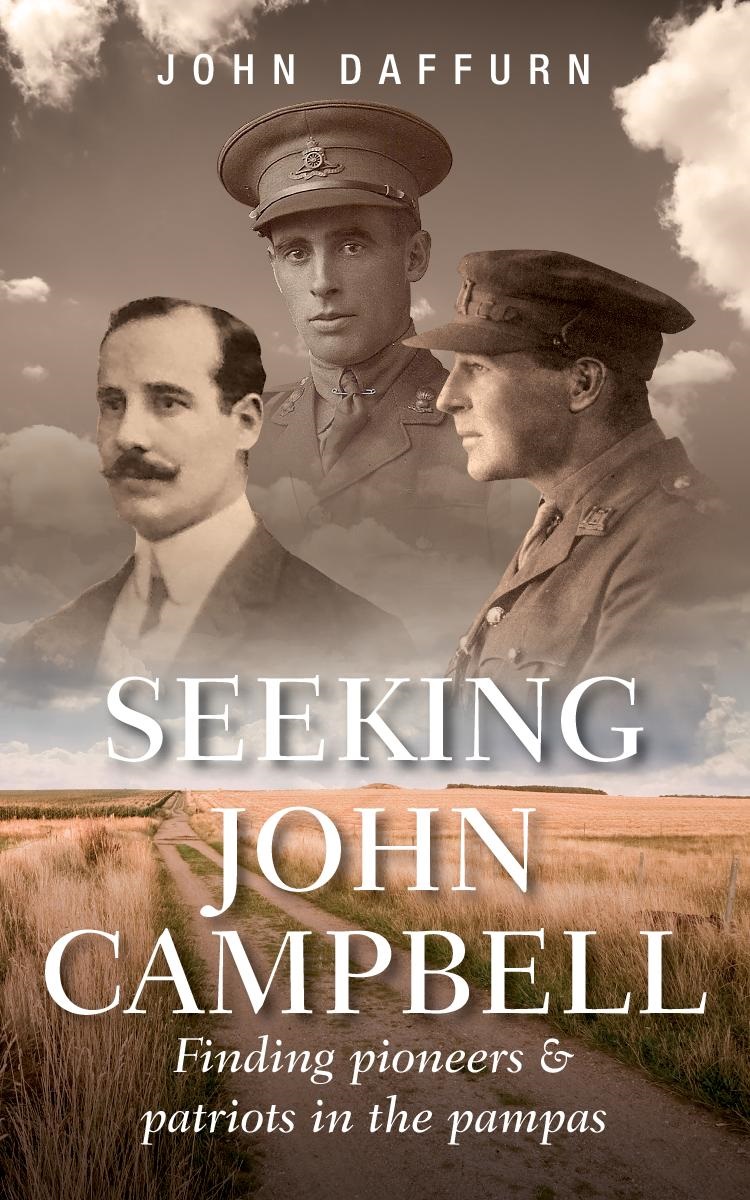
Seeking John Campbell FRONT COVER-page-001

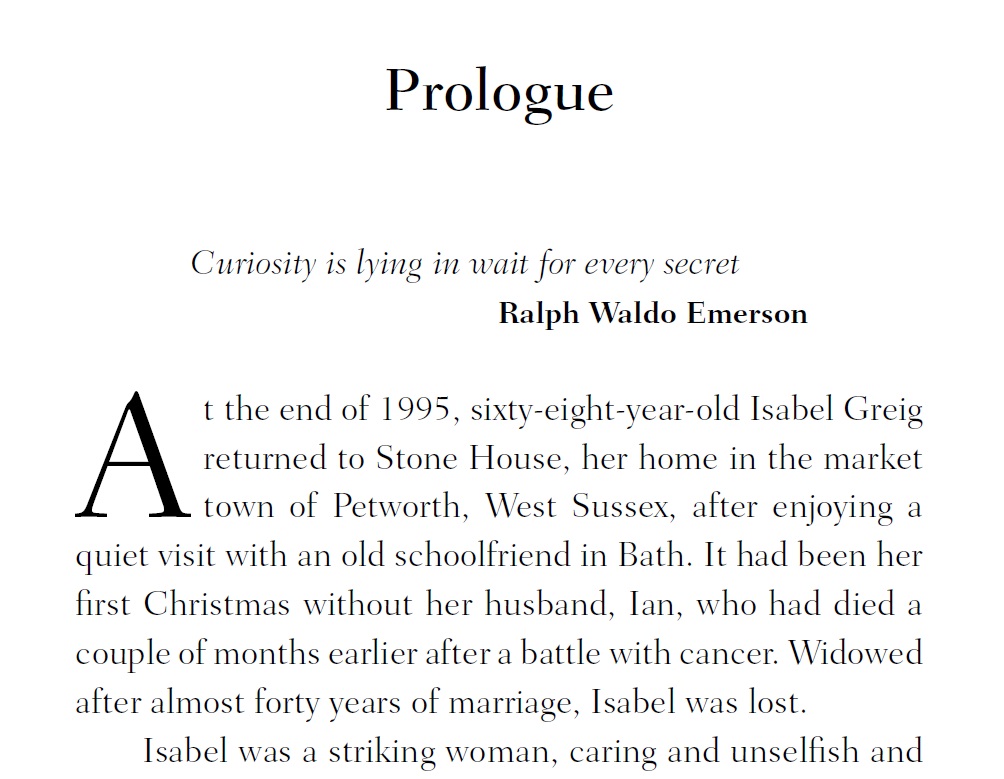
The excerpt below is taken from the first three pages of the Prologue and signals the start of my journey Seeking John Campbell


At the end of 1995, sixty-eight-year-old Isabel Greig returned to Stone House, her home in the market town of Petworth, West Sussex, after enjoying a quiet visit with an old schoolfriend in Bath. It had been her first Christmas without her husband, Ian, who had died a couple of months earlier after a battle with cancer. Widowed after almost forty years of marriage, Isabel was lost.

  Isabel was a striking woman, caring and unselfish and not without a sense of fun in happier times. She received fulsome support from her neighbours following the death of her beloved Ian, and when she returned after Christmas she telephoned a friend, who lived in a cottage opposite, but was persuaded not to visit her that evening as she was suffering from flu. The country was in the grip of the coldest winter for fourteen years and the following morning Isabel woke to a dusting of snow. Later that day, after light rain had washed the snow away, Isabel ventured out, but within yards of her home, slipped on black ice and fell to the ground, giving herself a hefty knock to the back of her head.

  A passing policeman comforted her and a neighbour took her in for a soothing cup of tea. Isabel regained her composure and, typically not wishing to make a fuss, assured everybody that she was fine. She returned to her house, saying that she would take it easy for the rest of the day. Her friend across the road, still recovering from influenza and unaware of Isabel’s fall, was not surprised that she hadn’t called that day, expecting her to be enjoying the company of those in better health.

  When Isabel’s neighbour knocked on her door the following morning, New Year’s Eve 1995, there was no response. Eventually, the police were called, the door was forced and on entering the house they found the lifeless Isabel in her bed. She had passed away during the night from what was later diagnosed as a brain haemorrhage. The coroner recorded a verdict of accidental death.


Fifteen years later, I was scanning the UK government’s list of estates unclaimed by relatives, which is held by the Treasury Solicitor. Each week their Bona Vacantia department add new estates and probate genealogists race to find potential heirs and help them to claim their money in return for a commission. Genealogy has been of interest to me for more than forty years and I had been surprised to discover that, apart from the weekly release, more than ten thousand other estates, going back thirty years, remained unclaimed. Why were these cases unresolved? Why had professional heir-hunters failed to unlock their secrets? Many of the cases would have been of little value and discarded as unprofitable at a time, pre-2007, when the values of the estates were published. Others must have been too difficult, or costly, to solve.

  With available time and a thirst for problem-solving, I considered finding out why those who had tried to solve the cases had failed. It would be an intellectual challenge, a genealogical jigsaw puzzle that, even if it ended in failure, would enhance my ancestry research skills. My curiosity got the better of me and I searched the list of unsolved cases to pluck one out for initial research, assuming that the heir-hunting roadblock would quickly become apparent.

  My action was no more sophisticated than scrolling the list to the Gs and sticking an imaginary pin on the computer screen. I was drawn to a female name and her details indicated that she may be a prime candidate for my research. Almost fifteen years had elapsed since her death, providing the heir-hunters with plenty of time to make their initial investigations into the case, yet it remained open. Another factor was that she was one of a small percentage of persons listed with three given names: always an additional aid in genealogical research. Furthermore, the third given name appeared to be a maiden or family name, providing additional clues for the researcher. Maria Isabel Pemberton Greig, who died at Petworth, Sussex, on 31 December 1995, was to be my test case.

If you liked this sample please share with your friendsTwitter_bird_logo_2012_svgRETWEET HERE

Posted in Uncategorized | Tagged , , | Leave a comment

Proofreading

This is another skillset that one can buy in. Hours or in my case years have been spent writing, rearranging, or editing and conventional wisdom is that a third party coming fresh to a manuscript is best placed for the task.

However I had worked with an editor whose final task was to complete a line edit and I was happy with the result. My decision was to proofread my own typeset work which I started after reading numerous online tips which included:

– reading each paragraph from the back of the book

– starting only after leaving the manuscript alone for some days

– read aloud or input into a digital reader and listen to the spoken word

– read in another format or typeface

I discovered more amendments than I had expected but as the blog below suggests it is easy to miss the obvious.

Raja Vudatala's avatarRandom

How often have we seen is that there is a gap between what is written and what is read. Often the state of mind we are in influences how we interpret a written word or phrase. The same holds good for a picture or a symbol. The mind undoubtedly plays a trick in such interpretations.

Let me give two examples:

mistakeConstudneon

Same way a written word is, more often than not, not interpreted the same way as it is meant to. The mind plays tricks and influences what we finally interpret from what we see and read. The interpretation that I speak of, is not only about know the meaning of the used word but goes beyond it and is more about the drawn perception upon reading the word. Another example is:

Aoccdrnig to rscheearch at Cmabrigde Uinervtisy, it deosn’t mttaer in waht oredr the ltteers in a wrod are, the…

View original post 335 more words

Posted in Seeking John Campbell, preparing for publication | Tagged , | Leave a comment

It looks like a book !

With my manuscript ready for typesetting, Chandler Book Design took over. It was a relief to get it off my desk and a pleasant surprise when the layout proposal came back. Suddenly I could see a book emerging.example of typset

Various editions went back and forth between us as modifications and improvements were made, images inserted and genealogy charts amended. The response from Chandler was always prompt and at times it was my own reviewing that couldn’t keep up.

Finally a fully typeset version was available for proof reading.

Posted in Seeking John Campbell, preparing for publication | Tagged , , | Leave a comment

Referencing and Indexing

Seeking John Campbell has over 120 endnotes and thirty images and my next challenge was to double check and verify the references and write them up in a consistent and acceptable style. I also needed to get written permissions to use the images and in the case of relatives of my three John Campbells I also wanted to give them the courtesy of seeing how I had treated the private information they had shared with me. Without their support and input this book would not have been possible.

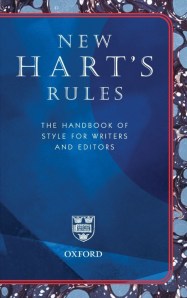
The referencing was not something that could be outsourced. It required patience and attention to detail and had to be consistent in style. Luckily, with the help of Harts Rules it was within my capability, but it did take a long time.

harts

Then came the dreaded index. I toyed with the idea of outsourcing this specialised area. The more I read about how to prepare an index the more frightened I became and I didn’t want to spoil the ship for a ha’porth of tar.

As I had done for the endnotes, I poured over New Harts Rules and the Chicago Manual of Style for clues and looked at examples of indexes in my own book collection. I concluded that outsourcing was also going to be hit and miss so I bit the bullet and set about it myself. The option in Microsft Word to generate an index was out of the question for me as it seemed like a skill in itself so I opted for the old fashioned method of manually writing index cards. Again it took weeks, but strangely I enjoyed it. In the process I learnt another skill and now know the intricacies of run-in versus indented indexes and letter by letter or word by word alphabetisation.

Posted in Seeking John Campbell, preparing for publication | Tagged , , | Leave a comment